Description
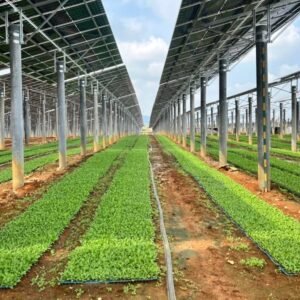
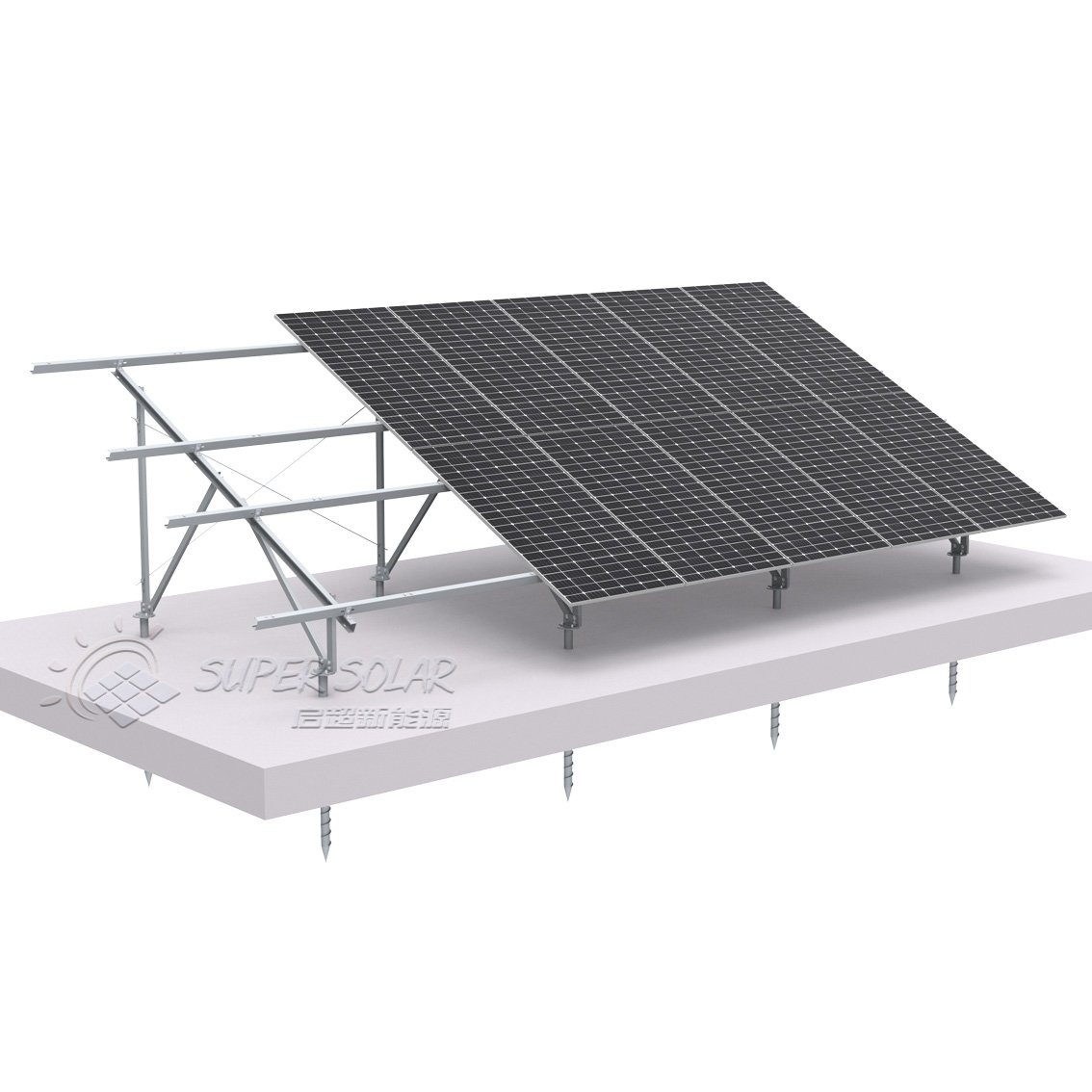
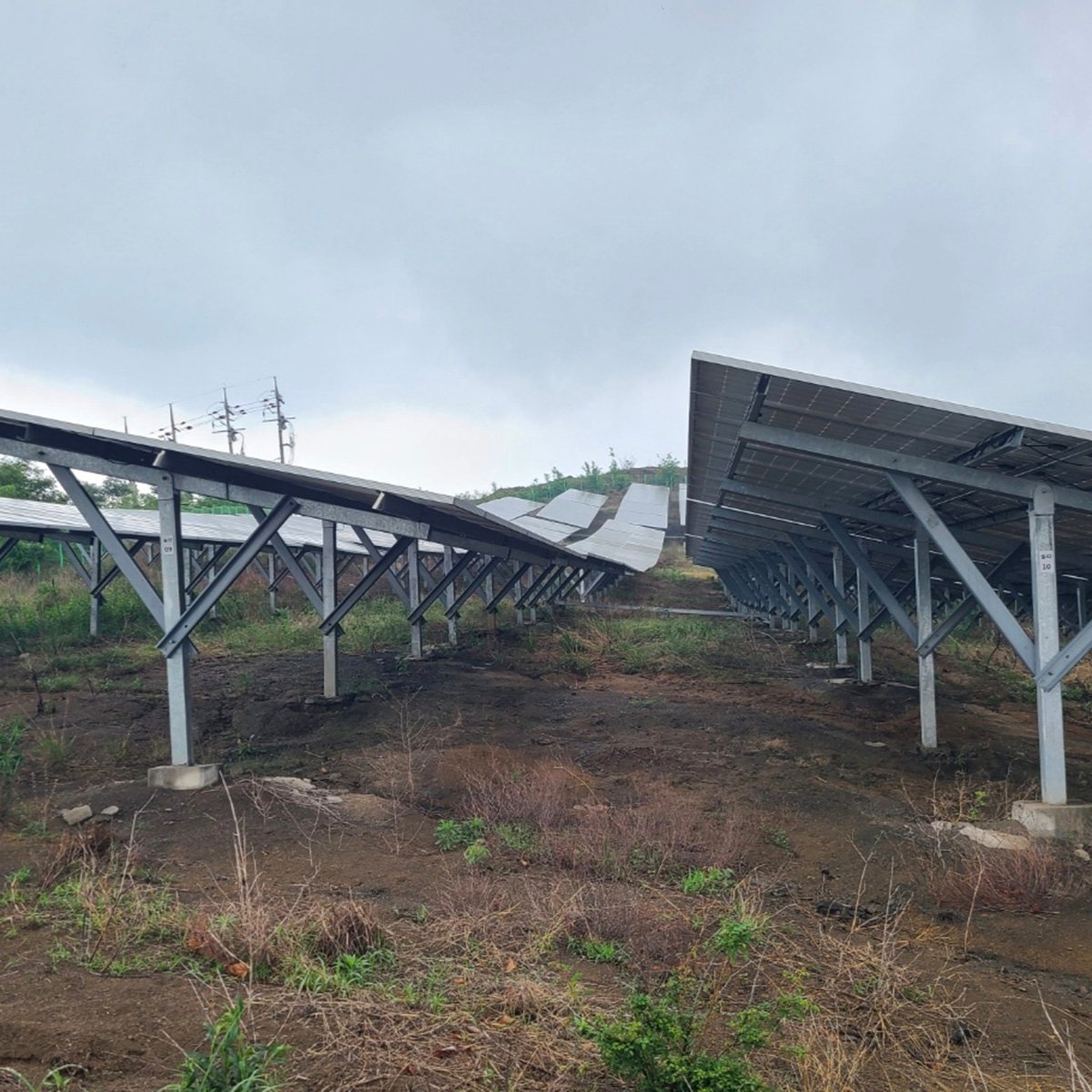
What is a ground solar mounting system? A racking structure that supports solar panels on open ground rather than on a roof. Vertical posts are anchored into the earth (via ground screws or concrete piers), diagonal braces and rails complete the frame, and panels are clamped onto the rails at a tilt angle optimized for sunlight capture.
Why SUPER SOLAR ground mounting?
Two foundation options
● — ground screws or concrete piers, chosen for your soil
Rigid, wind-resistant structure
● — diagonal bracing plus tension wires for lateral stability
Galvanized steel construction
● — corrosion-resistant for decades of outdoor service
Adjustable tilt
● — post heights vary to set the panel angle for your latitude
Tool-light, weld-free assembly
● — bolted connections, fast to install in the field
4. Key Features & Benefits
4.1 Foundation Options for Any Site
Foundation | Description | Best For |
Ground screws | Auger-style anchors driven deep into the soil, no concrete curing time | Loose/soft soil, fast installation, removable systems |
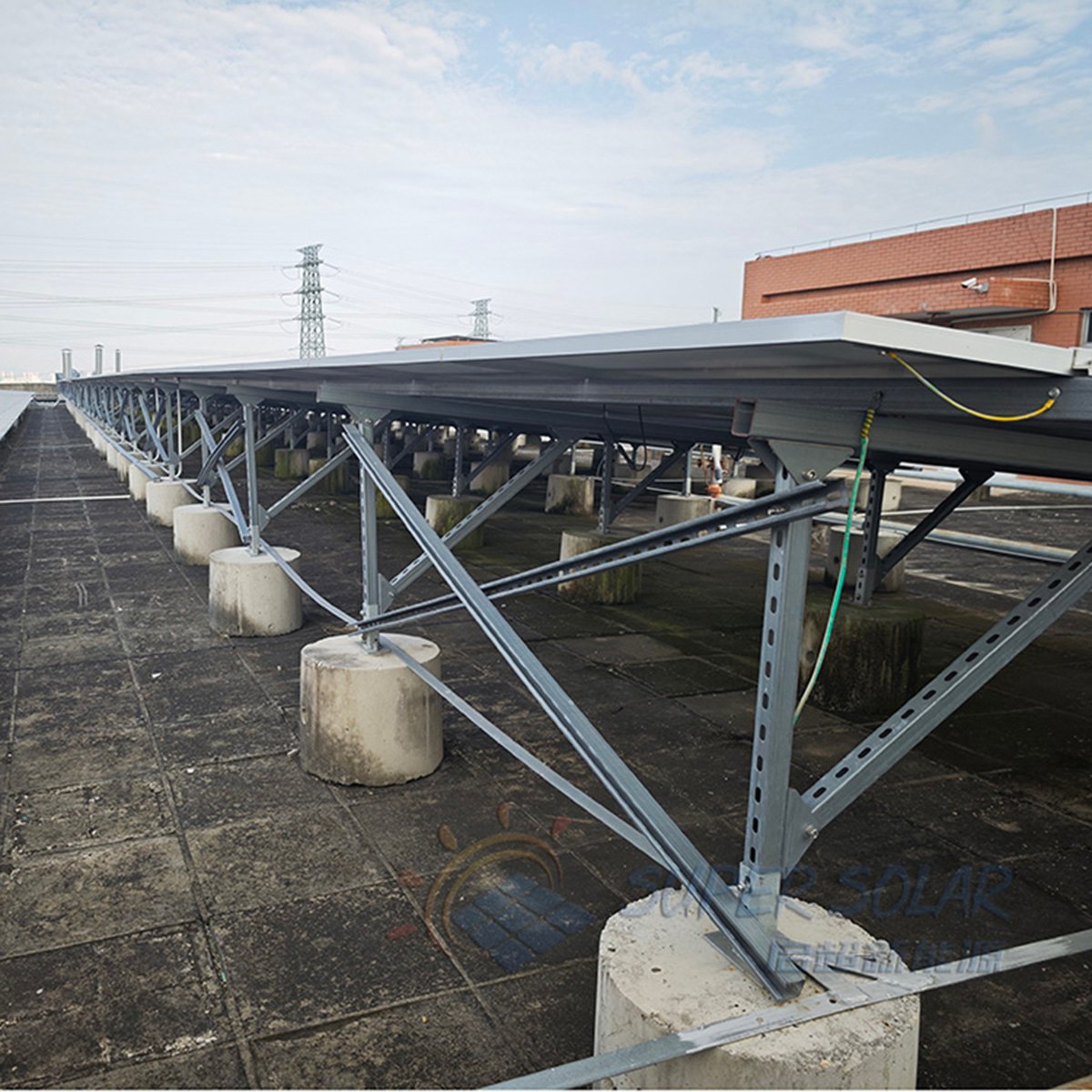
Concrete piers | Heavy cylindrical concrete blocks / poured footings anchoring the posts | Heavy structures, high wind zones, permanent installations |
Our engineers recommend the right foundation based on your site’s soil, wind, and project type.
4.2 Strong, Stable Structure
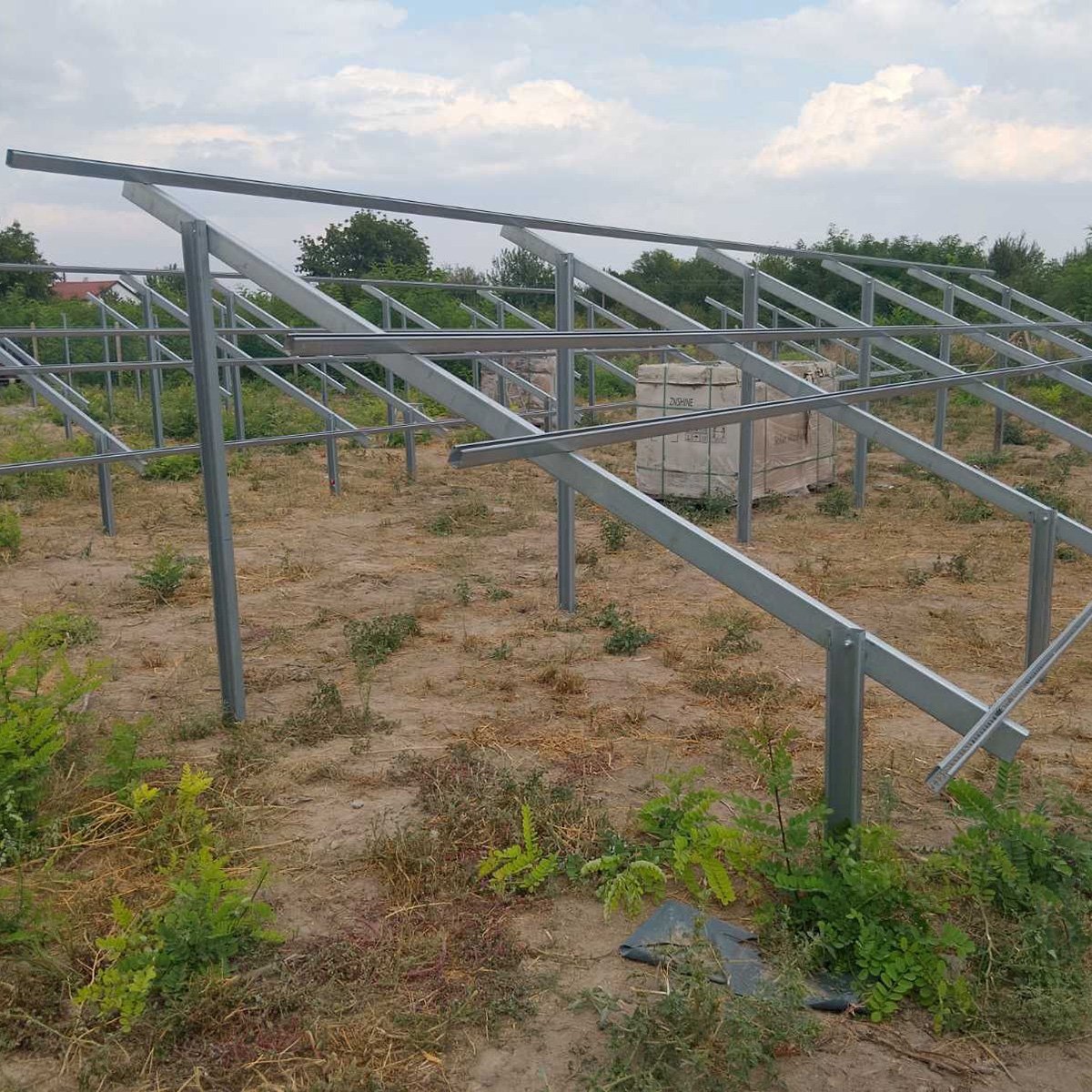
Vertical support posts
● — square or C-channel steel posts carrying the load
Diagonal bracing
● — angled beams connecting posts for longitudinal rigidity
Tension wires
● — X-pattern wires between posts for lateral stability
Horizontal rails (purlins)
● — the mounting surface panels clamp onto
The result: a rigid frame that resists wind lift and torsional stress across long array rows.
4.3 Adjustable Tilt Angle
Post heights are set to create the required panel tilt. The angle is customized per project to maximize annual yield at your site’s latitude.
4.4 Corrosion-Resistant Galvanized Steel
All structural components are hot-dip galvanized steel — built for long-term outdoor exposure in ground installations, where maintenance is difficult.
4.5 Fast, Weld-Free Assembly
Components are joined with bolts and brackets — no welding, no special equipment. Pre-drilled strut channels make positioning quick and precise, so a standard crew can erect large areas efficiently.
4.6 Complete Grounding Provisions
Bolt points and brackets support proper grounding wires (equipment grounding conductor) per electrical code, keeping the array safely bonded.
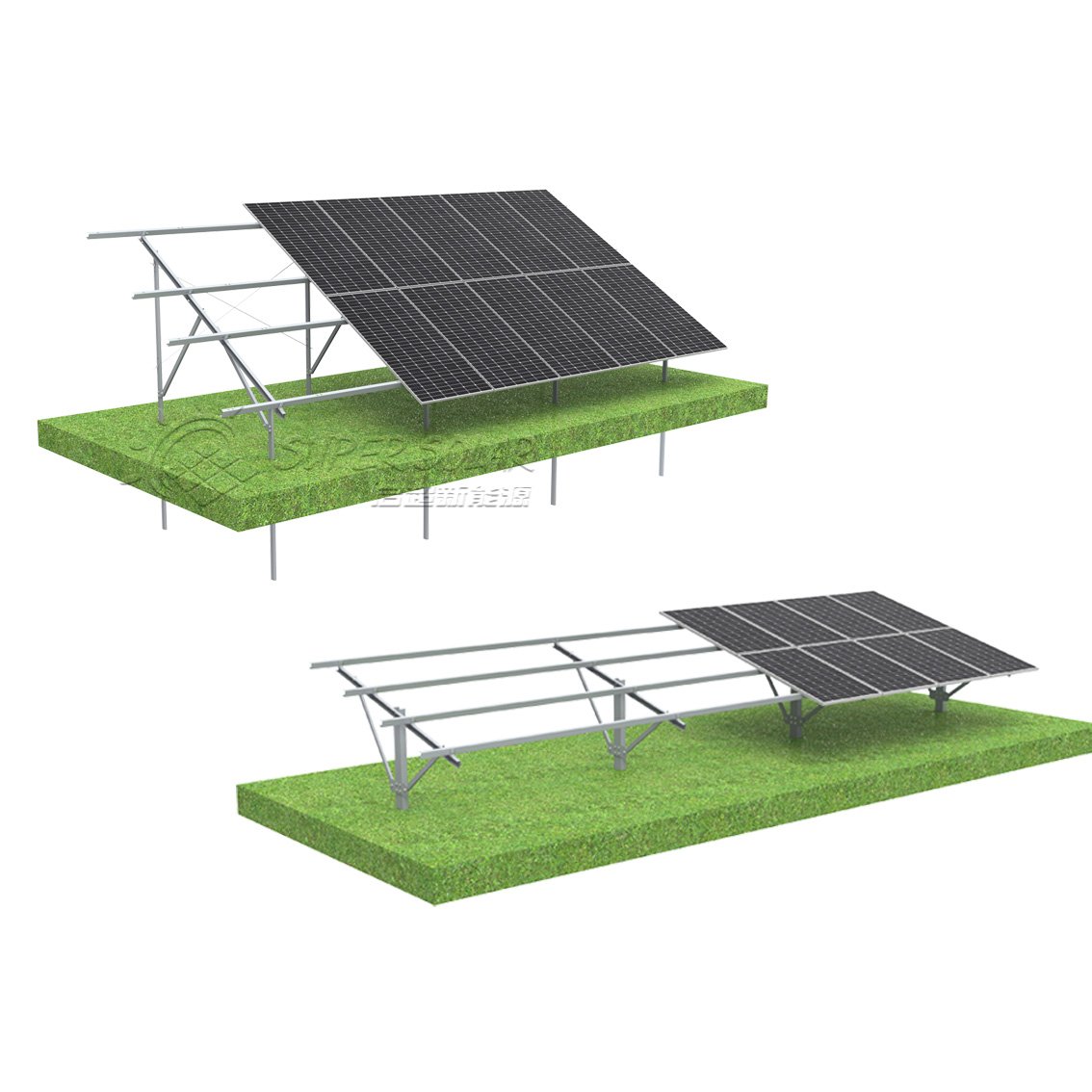
4.7 Two Structural Designs
Standard frame
● — tall posts with horizontal beams and cross-bracing for standard ground arrays
Low-profile frame
● — thicker central posts with diagonal arms supporting long rails, for lower wind profile and reduced visual impact
5. Technical Specifications
Parameter | Specification |
Application | Ground PV farms, commercial & utility-scale solar plants |
Material | Hot-dip galvanized steel |
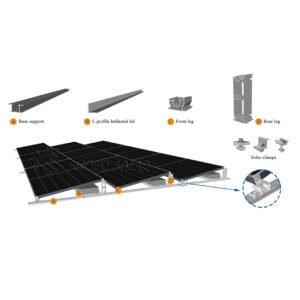
Main components | Vertical posts, diagonal bracing, horizontal rails (purlins), clamps, bolts & brackets |
Foundation options | Ground screws / concrete piers |
Tilt angle | Adjustable, set by post heights (custom per project) |
Assembly | Bolted connections, no welding |
Stability features | Diagonal bracing + X tension wires |
Grounding | Integrated grounding points per electrical code |
6. Installation Process (How It Works)
Site survey
1. — soil and wind analysis; foundation type selected
Foundation
2. — ground screws driven in, or concrete piers poured
Frame assembly
3. — vertical posts mounted, diagonal braces fixed
Rails installed
4. — purlins bolted across the rafters at the tilt angle
Panels mounted
5. — modules clamped onto the rails
Electrical
6. — grounding bonded, cabling run
7. Packaging & Shipping
● Seaworthy export packaging — components packed on pallets for container shipment
● Flat-pack delivery to minimize freight volume
● Complete installation documentation included
● Worldwide shipping available from our export base
8. Why Choose SUPER SOLAR (One Supplier)
Factory-direct supply
● — all structure components from one manufacturer
Field-proven
● — large-scale ground installations in real project conditions
Engineering support
● — structure sizing, tilt design, and foundation advice per project
Full export service
● — packaging, documentation, and logistics coordination
9. FAQ (for listing Q&A section)
Q: What foundations are available? A: Two options — ground screws (driven into the soil, no concrete curing) and concrete piers (poured footings). The choice depends on your soil conditions and project type.
Q: Is the tilt angle adjustable? A: Yes. Post heights are set during design to achieve the required tilt for your latitude and energy goals.
Q: Does the structure resist strong wind? A: Yes. The frame includes diagonal bracing and X-pattern tension wires for lateral stability, plus foundation options sized for heavy structures.
Q: Is welding required on site? A: No. All connections are bolted — no welding or special equipment needed.
Q: What material is used? A: Hot-dip galvanized steel for corrosion resistance and long service life in outdoor ground installations.
10. Assumptions & Placeholders
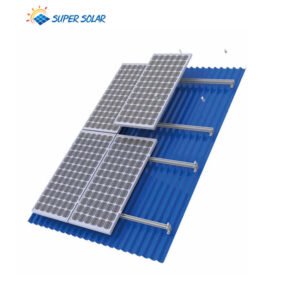
The copy above is based solely on the product images provided (3D renderings of the racking structure, component views, installation site photos). No claims beyond what the images show have been made.
Placeholders to confirm before publishing:
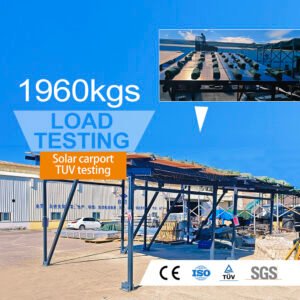
● Wind load / snow load ratings (tested values)
● Standard rail lengths and post dimensions
● Compatible panel types and sizes
● Certifications (CE / ISO / TÜV / SGS — confirm for this system)
● MOQ, lead time, pricing, payment & shipping terms
● Warranty period