Description
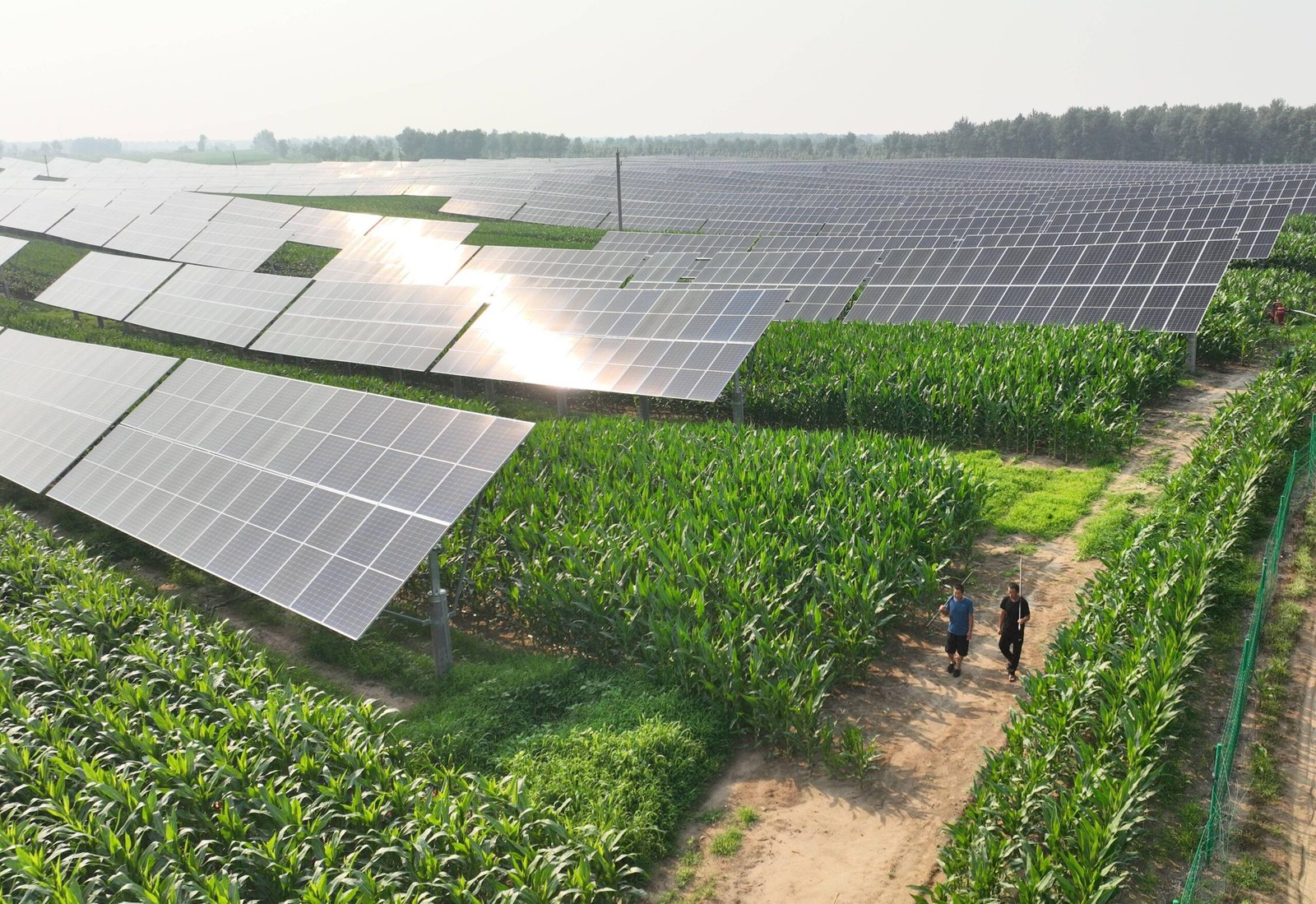
What is an agrivoltaic mounting system? A tall, elevated racking structure that supports solar panels several meters above ground, so the same land produces both electricity and crops. Unlike standard ground mounts, agrivoltaic structures are raised high enough for farming activities to continue beneath them.
Why SUPER SOLAR agrivoltaic mounting?
Dual land use
● — solar energy + agriculture on the same plot
High clearance
● — elevated design leaves room for crops, irrigation, and farm machinery
Crop-friendly shade
● — tuned row spacing balances sunlight for plants with energy generation
Heavy-duty galvanized frame
● — crossbeams and diagonal bracing for long-span stability
Custom-engineered
● — row spacing, tilt, and height matched to your crop and climate
4. Key Features & Benefits
4.1 One Land, Two Incomes
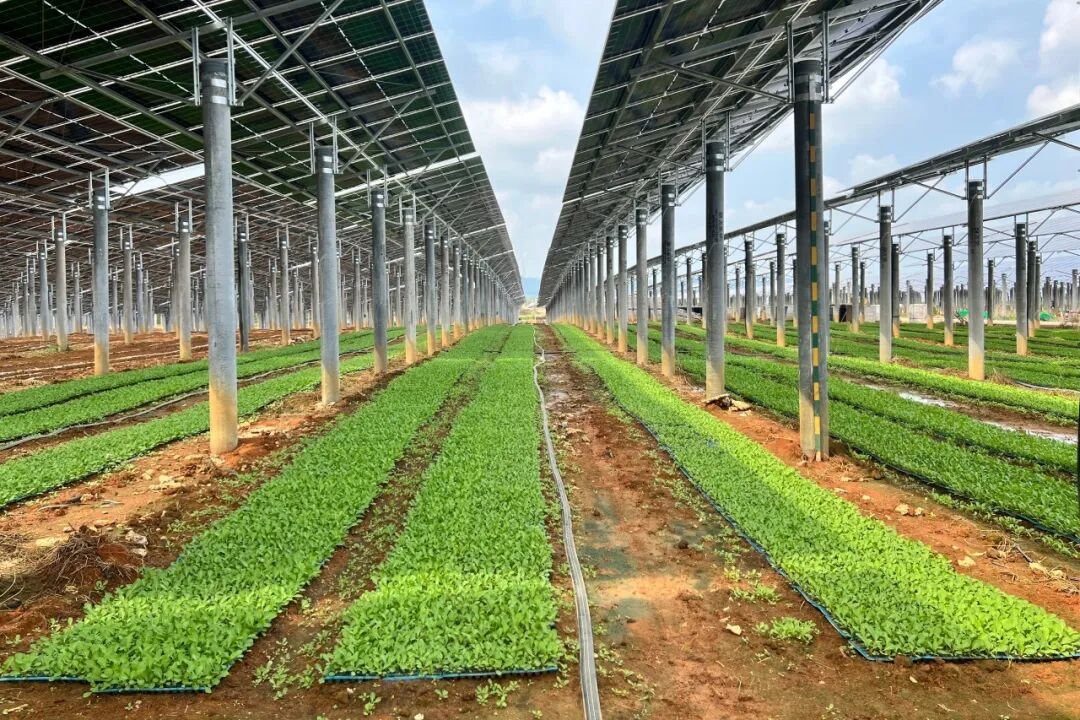
The elevated structure lets crops grow beneath the panels while the array generates power above. Farmers keep the land in production — no land-use conflict, no loss of agricultural income.
4.2 High-Clearance Elevated Design
● Structure raised several meters above ground
● Clearance for crops at full growth (corn, wheat, vegetables, seedlings)
● Space for irrigation hoses, farm equipment, and personnel underneath
● Reflective safety markings on support poles improve visibility for machinery
4.3 Optimized Shade for Crops
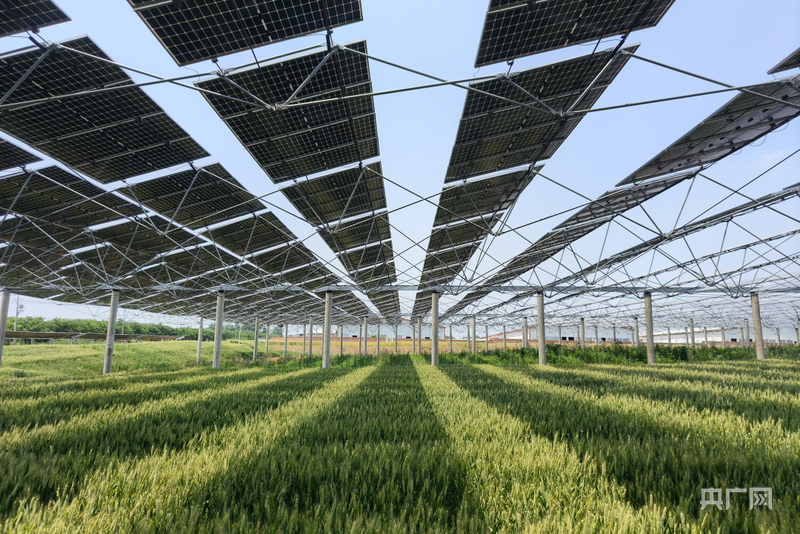
● Panels create a controlled light-and-shade pattern across the field
● Gaps between panel rows let sunlight reach the crops
● Protects plants from excessive heat while maintaining photosynthesis — field-proven on corn, cereal, and vegetable crops
4.4 Heavy-Duty Galvanized Steel Frame
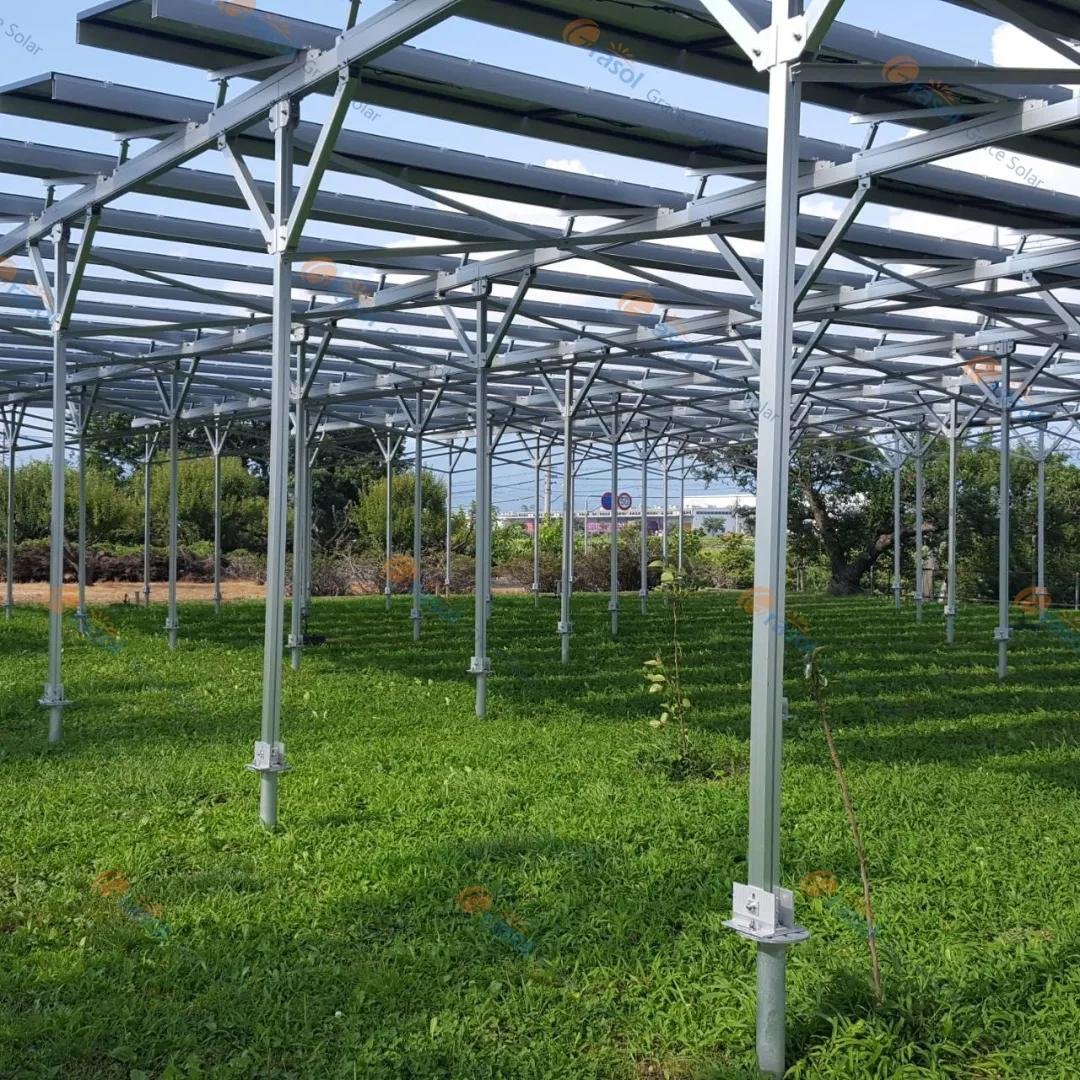
● Galvanized steel beams, rails, and diagonal cross-bracing
● X-pattern support rods between beams for lateral stability
● Long-span construction minimizes ground obstacles
4.5 Solid Foundations
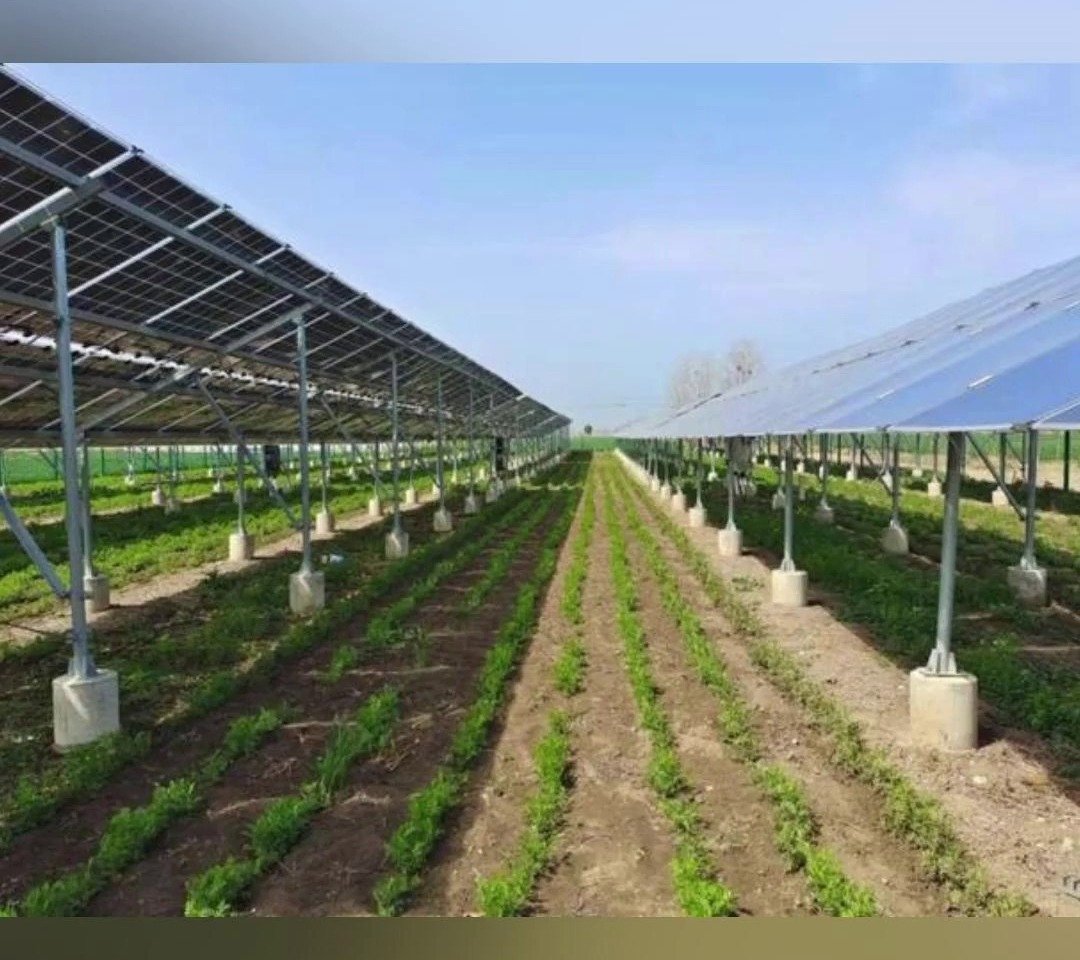
● Vertical support posts anchored in cylindrical concrete footers
● Option of concrete poles or steel posts with base plates, depending on soil and load requirements
● Engineered for utility-scale row layouts
4.6 Customized to Your Farm
● Row spacing and panel tilt adjusted per crop type and local climate
● Panel orientation designed for maximum generation with crop-friendly shading
● Scalable from field-scale to utility-scale installations
5. Technical Specifications
Parameter | Specification |
Application | Agrivoltaics — dual-use solar + agriculture on one land |
Structure type | Elevated, high-clearance mounting frame |
Material | Galvanized steel (beams, rails, bracing) |
Support | Vertical posts with concrete footers / base plates |
Stability | Diagonal cross-bracing + X-pattern support rods |
Ground clearance | High enough for crops, irrigation & machinery (custom per project) |
Panel arrangement | Long parallel rows with gaps for sunlight penetration |
Customization | Row spacing, tilt angle, height per crop & climate |
6. Installation & Land Use (How It Works)
Site & crop analysis
1. — crop type, sunlight needs, and machinery requirements assessed
Foundation
2. — concrete footers poured, support posts installed
Frame erection
3. — crossbeams and bracing assembled at elevated height
Panel mounting
4. — panels installed at the designed tilt with optimized row gaps
Farming continues
5. — crops planted, irrigated, and harvested beneath the array
7. Packaging & Shipping
● Seaworthy export packaging — components packed on pallets for container shipment
● Flat-pack delivery to minimize freight volume
● Complete installation documentation included
● Worldwide shipping available from our export base
8. Why Choose SUPER SOLAR (One Supplier)
Single-source supply
● — complete structure from one manufacturer
Dual-use expertise
● — designs that balance power generation with crop health
Engineering support
● — row spacing, tilt, and height designed for your site
Full export service
● — packaging, documentation, and logistics coordination
9. FAQ (for listing Q&A section)
Q: Can crops really grow under the panels? A: Yes. The elevated design with optimized row gaps creates a light-and-shade pattern that suits many crops — proven in field installations with corn, cereal, and vegetable crops.
Q: How high is the structure? A: Ground clearance is customized per project, but always high enough for crops at full growth and farm machinery access.
Q: Can I still use irrigation under the panels? A: Yes. The structure leaves room for irrigation hoses and standard farming operations beneath the array.
Q: What foundations are used? A: Vertical posts anchored in concrete footers, with options depending on soil conditions and load requirements.
Q: Is the structure designed for large farms? A: Yes. The system scales from field-scale to utility-scale row layouts with long-span galvanized frames.
10. Assumptions & Placeholders
The copy above is based on the 5 agrivoltaic reference images provided (aerial views, crop corridors, and structural details of elevated agrivoltaic farms). These are general reference/illustration photos — some carry third-party watermarks (e.g., Grace Solar, CNR.cn) and are NOT attributed to SUPER SOLAR in this copy. Structural facts (elevated frame, concrete footers, galvanized bracing, crop shading) are described from what the images show.
Placeholders to confirm before publishing:
● Standard ground clearance values (m)
● Span/row spacing options
● Wind / snow load ratings (tested values)
● SUPER SOLAR’s own agrivoltaic project photos (replace reference images)
● Certifications (CE / ISO / TÜV / SGS — confirm for this system)
● MOQ, lead time, pricing, payment & shipping terms
● Warranty period